
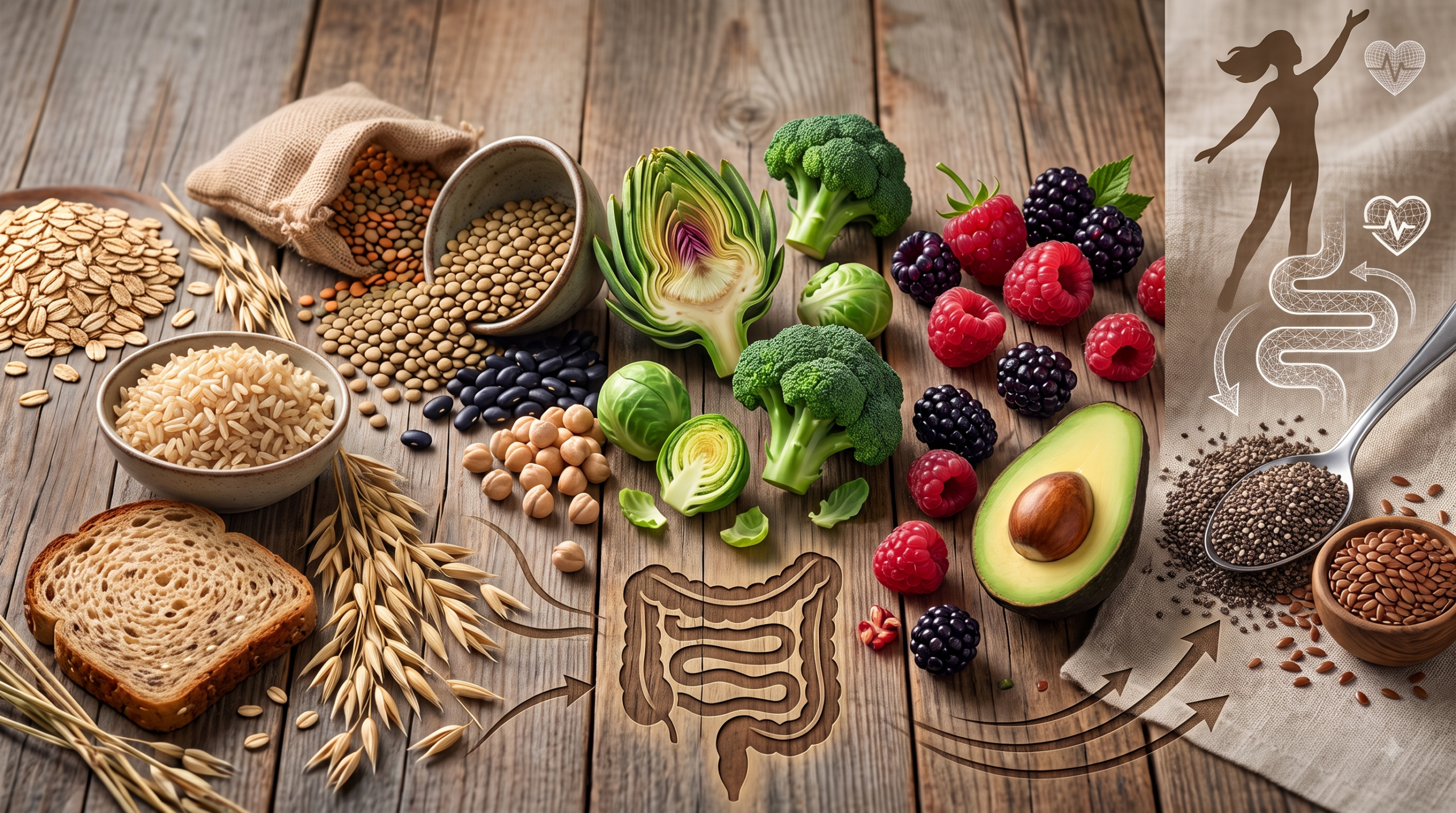

Despite being one of the most vital nutrients for long-term health, roughly 95% of adults fail to meet the recommended daily fiber intake, 25 grams for women and 38 grams for men. Often associated strictly with digestive regularity, dietary fiber is actually a powerhouse multi-tasker that influences everything from your immune system to metabolic health.
Why Fiber Is Non-Negotiable for Daily Wellness
Fiber is a non-digestible carbohydrate found in plant foods, divided into two main categories: soluble and insoluble. Both are necessary for optimal health.
- Feeds Your Microbiome: Soluble fiber acts as a prebiotic, nourishing beneficial gut bacteria. Healthy gut flora produce short-chain fatty acids (SCFAs) that reduce systemic inflammation and support immune function.
- Balances Blood Sugar: Soluble fiber slows the absorption of sugar into the bloodstream, preventing energy spikes and crashes after meals.
- Supports Cardiovascular Health: Soluble fiber binds to cholesterol particles in the digestive system and removes them from the body before they enter circulation.
- Promotes Satiety & Weight Management: High-fiber foods take longer to digest, keeping you fuller for longer and naturally curbing overeating.
- Keeps Digestion Moving: Insoluble fiber adds bulk to stool and speeds up transit time through the digestive tract.
Top High-Fiber Foods to Add to Your Plate
To hit your daily target, incorporate a variety of whole plants across your meals.
| Food Category | Top Sources | Fiber Content (Approx.) |
| Legumes & Pulses | Lentils, black beans, chickpeas, split peas | 12–15g per cooked cup |
| Seeds & Nuts | Chia seeds, flaxseeds, almonds, pumpkin seeds | 5–10g per 2 oz / 2 tbsp |
| Berries & Fruits | Raspberries, blackberries, pears (with skin), apples | 4–8g per cup / medium fruit |
| Whole Grains | Rolled oats, quinoa, barley, whole wheat pasta | 4–6g per cooked cup |
| Vegetables | Artichokes, Brussels sprouts, broccoli, avocado | 4–10g per serving |
Simple Daily Strategies to Fiber-Up
Increasing your fiber intake doesn’t require a total diet overhaul. Start with small, consistent habits:
- Swap Refined Grains: Choose oats, quinoa, or whole-grain bread over white rice and refined flour.
- Power Up Your Breakfast: Stir 2 tablespoons of chia or ground flaxseeds into morning oatmeal, yogurt, or smoothies.
- Keep the Skins On: Leave peels on apples, pears, and potatoes to retain maximum fiber.
- Hydrate Consistently: As you increase fiber, drink plenty of water to help it move smoothly through your digestive tract and prevent bloating.
The Bottom Line
Fiber isn’t just a digestive aid, it is a foundational pillar of metabolic resilience, cardiovascular longevity, and gut health. By focusing on whole, plant-rich foods at every meal, hitting your daily fiber goals becomes simple, natural, and highly rewarding for your overall well-being.