
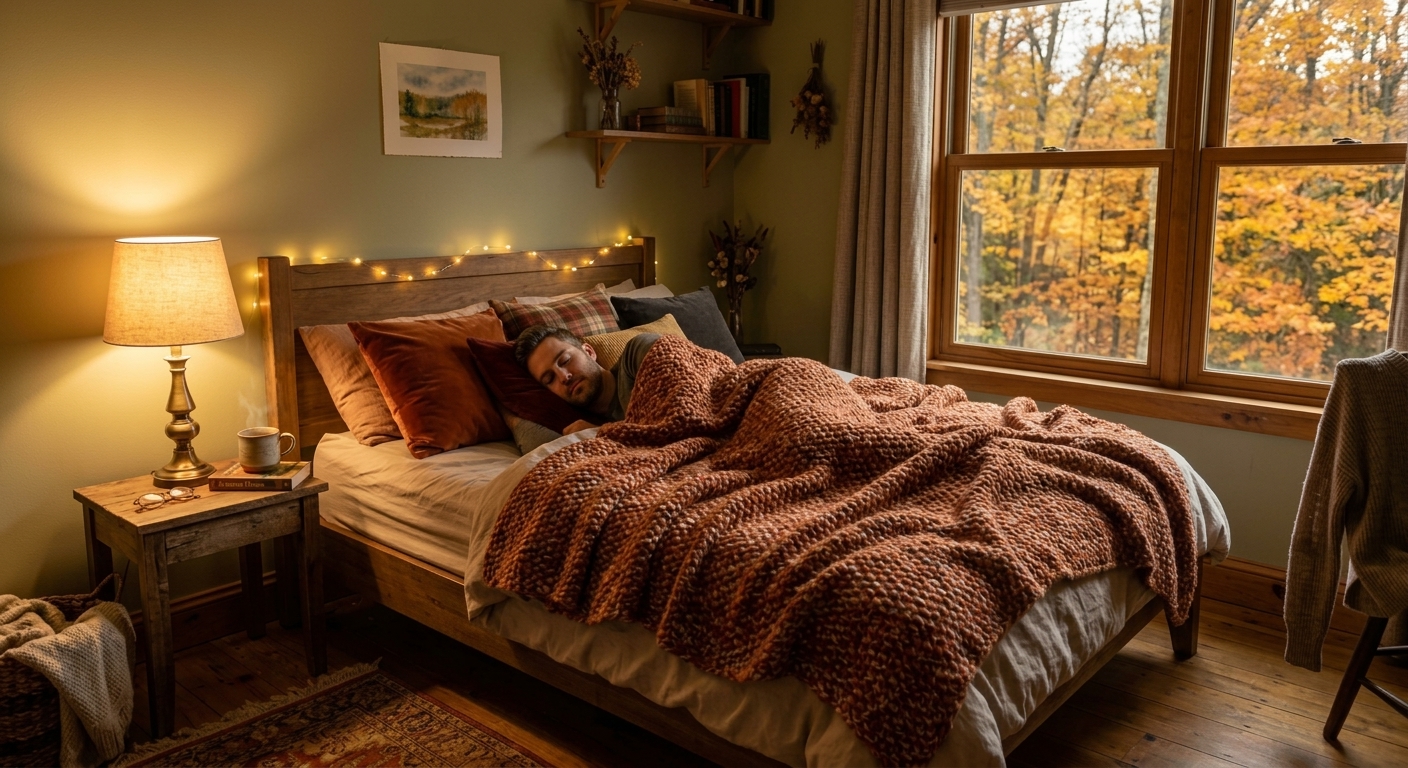
There is a distinct magic to autumn—the crisp morning air, golden foliage, and the cozy urge to curl up under heavy blankets. Yet, as the sun begins to set earlier and the nights stretch longer, many of us find ourselves facing an unexpected paradox: despite spending more time in bed, we wake up feeling surprisingly unrefreshed, groggy, and cognitively sluggish.
This isn’t a lack of willpower; it’s rooted in human biology. Our central biological clock—located in the suprachiasmatic nucleus (SCN) of the hypothalamus—relies heavily on environmental light cues to synchronize our sleep-wake cycle, hormone release, and metabolic rhythms. When daylight hours shrink in autumn, our internal clock can experience “social jetlag” or seasonal phase drift, causing daytime melatonin leakage and serotonin dips.
Rather than fighting the season, we can lean into the Nordic art of winter living by aligning our daily routines with seasonal light shifts. Here are 7 evidence-based, circadian-focused sleep habits to restore your vitality as autumn deepens.
1. Anchor Your SCN with 10,000 Lux Morning Light
When sunlight drops in October and November, morning melatonin clearance slows down, leaving you with that heavy “sleep inertia” fog. Exposing your eyes to bright light shortly after waking triggers a sharp cortisol awakening response, shutting off pineal melatonin production and setting a timer for natural sleepiness 14 to 16 hours later.
- The Science: Research published by the American Academy of Sleep Medicine (AASM) underscores that bright morning light exposure is the most powerful zeitgeber (time-giver) for entraining human circadian rhythms.
- The Action: Step outside for 15 to 20 minutes within an hour of waking. If your morning routine begins before dawn, sit in front of a medical-grade 10,000-lux light therapy box for 20–30 minutes while sipping your morning coffee.
2. Shift to Warm, Low-Kelvin “Campfire” Evening Lighting
While morning requires bright cool light, evening hours demand ambient warmth. Standard overhead LED bulbs emit high amounts of blue spectrum light (460–480 nm wavelengths), which directly suppresses pineal gland melatonin secretion even at low intensities.
- The Science: Studies from the Sleep Research Society demonstrate that blue-enriched light exposure in the 2–3 hours before bed delays circadian phase timing, shifting sleep onset later and impairing slow-wave (deep) sleep quality.
- The Action: After sunset, turn off harsh overhead lighting. Switch to warm floor lamps fitted with warm-toned bulbs (2,000K or lower) or red-spectrum amber lights to signal biological night to your brain.
3. Practice Thermal Cooling Before Bed
Our body temperature naturally drops by 1 to 2 degrees Fahrenheit in the late evening to facilitate sleep onset and deep stage N3 sleep. While pile-on heavy fleece blankets feel cozy, overheating mid-night disrupts rapid eye movement (REM) cycles and increases nighttime awakenings.
- The Science: Thermoregulation research from the National Sleep Foundation highlights that ambient room temperatures between 60°F and 67°F (15°C–19°C) optimize core cooling required for uninterrupted deep sleep cycles.
- The Action: Keep your bedroom thermostat cool at night while layering breathable, natural textiles (like organic cotton, linen, or wool) rather than synthetic polyesters that trap humidity and excess heat.
4. Time Your Autumn Comfort Meals Wisely
As temperatures cool, our appetite naturally shifts toward heartier soups, root vegetables, and warm starches. However, eating heavy dinners late in the evening forces your digestive system to work during biological night, artificially raising core temperature and disrupting heart rate variability (HRV) during early sleep cycles.
- The Science: Clinical studies on chrononutrition reveal that late-night calorie intake causes metabolic circadian misalignment, impairing fasting glucose control and delaying sleep architecture progression.
- The Action: Aim to finish your last meal 3 hours before your target bedtime. If you require a late snack, choose small portions rich in natural tryptophan or magnesium, such as a handful of walnuts or pumpkin seeds with chamomile tea.
5. Implement a Strict 60-Minute Screen-Free Buffer
Scrolling through social media or watching thrilling TV shows in bed delivers a double blow to autumn sleep: bright screen light suppresses melatonin, while stimulating digital content elevates dopamine and cortisol.
- The Science: Systematic reviews published in Sleep Medicine Reviews confirm that pre-bed screen usage significantly increases sleep latency (the time it takes to fall asleep) and degrades overall sleep efficiency across all age groups.
- The Action: Establish a non-negotiable “digital sunset” 60 minutes before bed. Replace screens with relaxing physical activities: read a physical book under warm lamp light, journal, or practice gentle evening stretching.
6. Embrace Hot-to-Cold Hydrotherapy
Taking a warm bath or shower 90 minutes before bed is one of the most reliable ways to induce natural drowsiness—a phenomenon known as the “warm bath effect.”
- The Science: Heating your skin draws blood flow away from your core to the extremities (vasodilation). When you step out of the warm water into a cooler room, your core body temperature rapidly drops, mimicking the brain’s natural pre-sleep physiological signal.
- The Action: Soak in a warm bath enriched with Epsom salts (magnesium sulfate) for 15–20 minutes about an hour and a half before turning in. The resulting temperature drop signals your hypothalamus to release endogenous melatonin.
7. Keep Your Weekend Sleep Schedule Consistent
When dark fall mornings make staying in bed tempting, sleeping in on Saturday and Sunday mornings creates a circadian disruption known as “social jetlag”. Shifting your wake time by more than 60–90 minutes on weekends desynchronizes your internal clock, making Monday morning wake-ups significantly harder.
- The Science: Position papers from the American Academy of Sleep Medicine (AASM) emphasize that maintaining a consistent sleep-wake schedule 7 days a week stabilizes circadian amplitude and improves daily alertness far more effectively than “catching up” on lost sleep.
- The Action: Pick a realistic morning wake time that works for both weekdays and weekends. If you feel tired on Sunday afternoon, opt for a brief 20-minute power nap before 3:00 PM rather than sleeping late in the morning.
The Autumn Circadian Routine at a Glance
| Time Frame | Circadian Habit | Biological Goal | Key Sources |
|---|---|---|---|
| 07:00 AM – 08:00 AM | 15–20 mins 10,000 Lux Light or Sunlight | Suppress daytime melatonin; trigger cortisol spike | AASM, Harvard Health |
| 06:00 PM – 07:00 PM | Finish dinner (3-hr pre-bed window) | Prevent core body heating & metabolic lag | Chrononutrition studies |
| 08:30 PM – 09:30 PM | Switch off screens & dim overhead lighting | Prevent melatonin suppression | Sleep Medicine Reviews |
| 09:30 PM – 10:00 PM | Warm Epsom bath (90 mins pre-sleep) | Induce core body cooling & vasodilation | Sleep Foundation |
| 10:30 PM | Cool bedroom (60°F–67°F) & dark room | Support continuous deep stage N3 & REM sleep | National Sleep Foundation |