
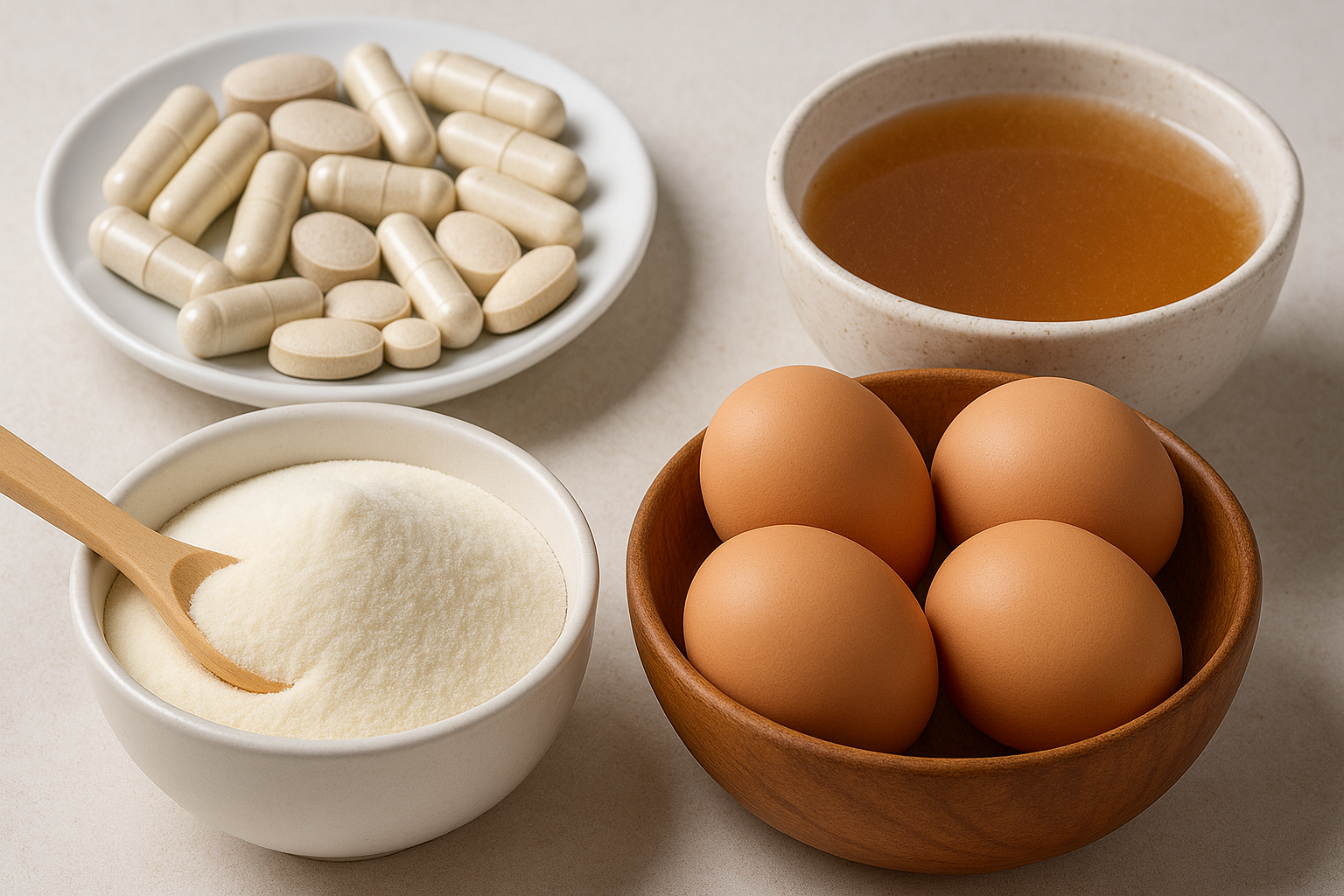

Collagen has become one of the most popular supplements in the wellness industry, and for good reason. Often referred to as the body’s “scaffolding,” collagen is the most abundant protein in the human body, making up about 30% of total protein content. It provides structure to skin, hair, nails, joints, bones, and connective tissues.
As we age, natural collagen production begins to decline, typically starting in our mid-20s and accelerating in our 30s and 40s. This leads to visible signs of aging such as wrinkles, sagging skin, and weaker joints. Collagen supplements, whether in powder, capsule, or liquid form, aim to restore collagen levels and support overall health and vitality.
What is Collagen?
Collagen is a structural protein composed of amino acids, primarily glycine, proline, and hydroxyproline. It acts as a building block for tissues, maintaining elasticity and strength. There are at least 28 different types of collagen, but the most common forms in the body include:
- Type I: Found in skin, bones, ligaments, and tendons; supports skin elasticity and structure.
- Type II: Found in cartilage; important for joint health.
- Type III: Found in muscles, blood vessels, and skin; works with Type I for elasticity.
- Type IV: Found in the layers of skin; supports filtration and skin barrier function.
Why Collagen Declines with Age
- Natural aging reduces collagen production.
- UV exposure accelerates collagen breakdown in the skin.
- Dietary factors such as high sugar intake damage collagen through glycation.
- Lifestyle factors like smoking and excessive alcohol use weaken collagen fibers.
Benefits of Collagen Supplements
1. Skin Health and Anti-Aging
Collagen supplements are widely recognized for their skin benefits. Studies show that hydrolyzed collagen (collagen peptides) improves skin hydration, elasticity, and reduces fine lines and wrinkles. By boosting skin density, collagen helps restore a youthful appearance.
2. Joint and Cartilage Support
Collagen Type II is essential for cushioning joints. Supplementing with collagen can reduce stiffness, improve mobility, and relieve discomfort in individuals with osteoarthritis or joint stress from physical activity.
3. Bone Strength
Collagen provides structure to bones. Research indicates collagen supplements may improve bone mineral density and reduce the risk of fractures, particularly in postmenopausal women.
4. Muscle Mass and Recovery
Collagen contains amino acids that support muscle repair. When combined with resistance training, collagen supplementation can increase muscle mass, strength, and recovery.
5. Hair and Nail Growth
Collagen peptides supply amino acids that strengthen keratin production, leading to thicker hair and reduced nail brittleness.
6. Gut Health
Collagen may help repair the gut lining, supporting digestive health and reducing symptoms of leaky gut syndrome.
Types of Collagen Supplements
1. Hydrolyzed Collagen (Collagen Peptides)
Broken down into smaller peptides for easier absorption; the most common form in powders and capsules.
2. Gelatin
Partially hydrolyzed collagen; used in cooking and less commonly as a supplement.
3. Undenatured Collagen (UC-II)
Less processed, often used in small doses for joint health.
4. Marine Collagen
Sourced from fish; known for smaller peptide size and higher bioavailability, making it a popular choice for skin health.
5. Bovine Collagen
Derived from cows; rich in Type I and III collagen, supporting skin, hair, and joint health.
Best Ways to Take Collagen
- Powders: Easily mixed into coffee, smoothies, or soups.
- Capsules: Convenient for daily use.
- Liquids: Quick absorption and often flavored for taste.
Collagen supplements are most effective when paired with Vitamin C, which supports collagen synthesis in the body.
Safety and Side Effects
Collagen is generally considered safe with minimal side effects. Some users report mild digestive symptoms such as bloating or heartburn. Choosing high-quality, third-party tested collagen ensures purity and effectiveness.
Lifestyle Tips to Boost Collagen Naturally
- Eat collagen-rich foods: bone broth, chicken skin, fish, and egg whites.
- Consume Vitamin C–rich foods like citrus, berries, and bell peppers.
- Limit sun exposure and always use sunscreen.
- Avoid smoking and excessive alcohol, both of which damage collagen.
Conclusion
Collagen supplements are more than a beauty trend, they support skin, joints, bones, muscles, hair, nails, and gut health. With growing scientific evidence and multiple supplement options available, collagen has earned its place in the wellness routines of millions worldwide.
Whether you choose marine collagen for glowing skin or bovine collagen for stronger joints, adding collagen to your daily routine can help restore what age and lifestyle naturally take away. Pair it with a balanced diet and healthy habits, and you’ll be giving your body the foundation it needs to thrive.