

Introduction
Sodium is one of the most essential minerals in the human body, playing a key role in fluid balance, nerve function, and muscle contraction. Yet, while sodium is necessary for survival, too much of it can pose serious health risks. With processed foods dominating many diets today, sodium intake often exceeds healthy levels, making it important to understand how much you need, where it comes from, and how to manage it.
Why Sodium Matters
Sodium is a type of electrolyte that works closely with potassium to regulate the body’s water balance. It is also vital for:
- Nerve signaling: Helps transmit electrical impulses in the body.
- Muscle contraction: Ensures proper muscle function, including the heart.
- Blood pressure regulation: Maintains fluid balance, which directly affects blood pressure.
The recommended daily intake for most adults is less than 2,300 milligrams per day, according to the American Heart Association. However, the average person consumes much more, often double the recommended amount.
Health Benefits of Sodium (in the Right Amounts)
- Supports hydration: Sodium helps the body retain water, which is essential for staying hydrated during physical activity.
- Prevents low blood pressure: Adequate sodium keeps blood pressure from dropping too low, reducing risks like dizziness or fainting.
- Maintains pH balance: Sodium helps regulate acid-base balance in the body.
Risks of Too Much Sodium
Excess sodium intake is linked to several chronic health conditions:
- High blood pressure: One of the strongest risk factors for hypertension.
- Heart disease and stroke: Elevated sodium levels increase strain on the cardiovascular system.
- Kidney damage: High sodium intake can impair kidney function and contribute to kidney stones.
- Bone health concerns: Too much sodium may lead to calcium loss, which affects bone strength.
- Fluid retention and bloating: Common short-term effects of a high-sodium diet.
Signs You May Be Consuming Too Much Sodium
- Persistent thirst
- Swelling in hands, feet, or face
- Frequent headaches
- Elevated blood pressure readings
- Feeling bloated after meals
Foods High in Sodium to Avoid or Limit
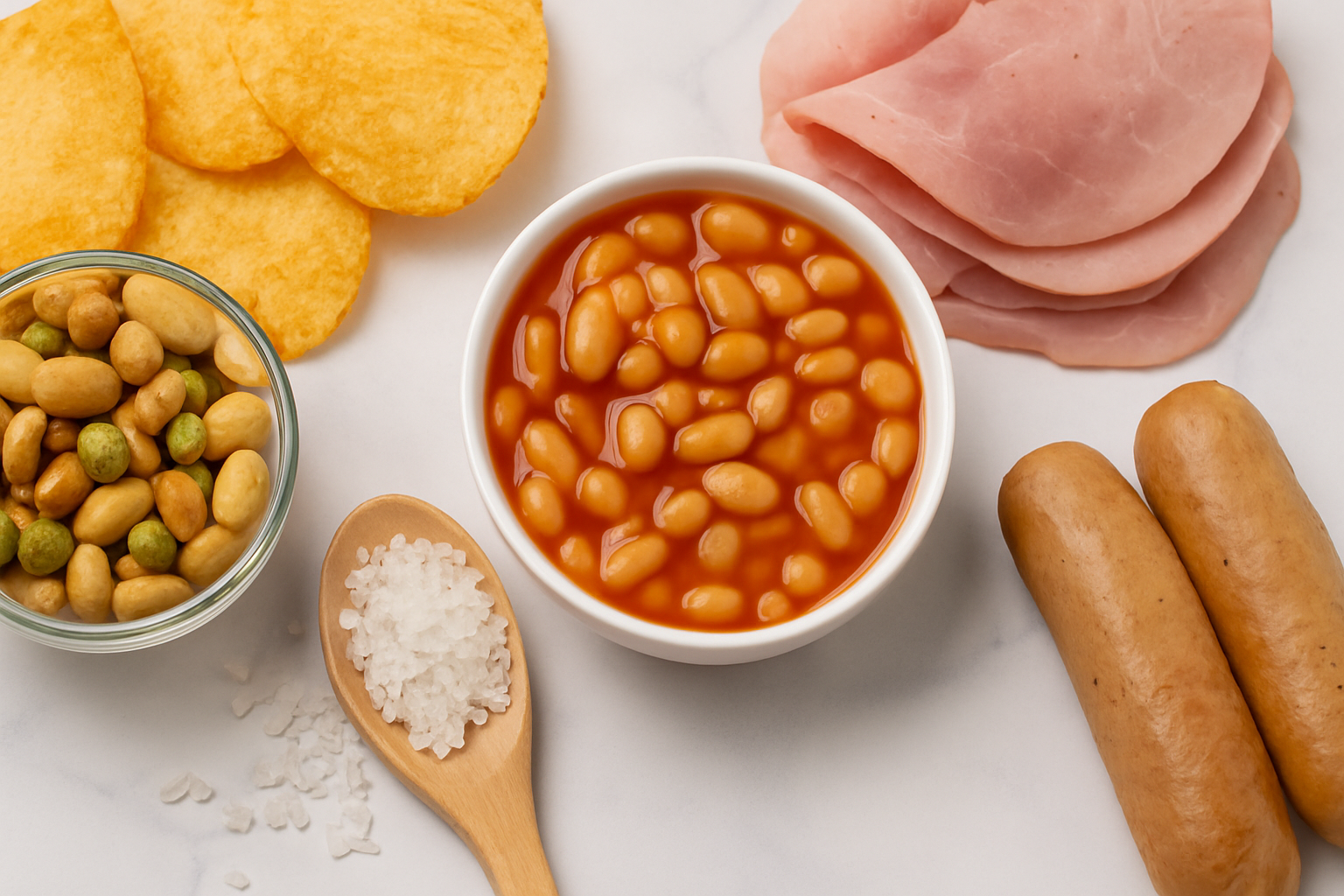
Many sodium-rich foods don’t taste particularly salty, which makes them easy to overlook. Common culprits include:
- Processed meats: Bacon, sausages, deli meats, and hot dogs
- Canned soups and vegetables: Often loaded with added salt for preservation
- Frozen meals: Convenient but usually very high in sodium
- Snack foods: Chips, pretzels, and salted nuts
- Fast food and restaurant meals: Frequently contain excessive amounts of sodium
- Condiments and sauces: Soy sauce, ketchup, salad dressings, and packaged seasoning mixes
Healthier Alternatives
- Choose fresh fruits and vegetables over canned or processed versions.
- Opt for lean, fresh meats instead of cured or deli meats.
- Use herbs, spices, lemon juice, or vinegar for flavor instead of salt.
- Select low-sodium or no-salt-added products when available.
- Cook at home to control the amount of sodium added to meals.
How to Balance Sodium in Your Diet
- Read nutrition labels carefully, sodium is hidden in many packaged foods.
- Gradually reduce salt in cooking to let your taste buds adjust.
- Increase potassium intake with foods like bananas, sweet potatoes, spinach, and beans, which counteract sodium’s effects on blood pressure.
- Stay hydrated, water helps flush excess sodium from the body.
Conclusion
Sodium is essential, but balance is key. While it supports hydration, nerve function, and muscle activity, too much can raise the risk of hypertension, heart disease, and kidney issues. By being mindful of sodium-rich foods and choosing healthier alternatives, you can protect your long-term health without sacrificing flavor.
Remember: Your body needs sodium, but in moderation. Small changes like cooking more meals at home, using fresh ingredients, and seasoning with herbs instead of salt, can make a big difference in keeping your sodium intake in check.