
Introduction
When it comes to essential nutrients, Vitamin K2 doesn’t always get the spotlight, but it should. Unlike its better-known relative Vitamin K1, which helps with blood clotting, Vitamin K2 plays a crucial role in bone, heart, and overall metabolic health.
More people are now turning to Vitamin K2 supplements and nutrient-rich foods to ensure they’re not missing out on this often-overlooked vitamin.
What Is Vitamin K2?
Vitamin K is a fat-soluble vitamin that comes in two main forms:
- Vitamin K1 (phylloquinone): Found in leafy greens; primarily supports blood clotting.
- Vitamin K2 (menaquinones): Found in animal-based foods and fermented foods; helps regulate calcium and supports heart and bone health.
K2 is unique because it directs calcium to the right places (bones and teeth) and keeps it away from the wrong places (arteries and soft tissues).
Why the Body Needs Vitamin K2
1. Stronger Bones
Vitamin K2 activates proteins that bind calcium to the bones, making them stronger and less prone to fractures. It works synergistically with Vitamin D3, which helps the body absorb calcium.
2. Heart Health
By preventing calcium buildup in the arteries, K2 supports cardiovascular health. Studies suggest higher K2 intake is linked to a lower risk of arterial stiffness and heart disease.
3. Dental Health
K2 also supports oral health by activating proteins that help keep teeth strong and resilient.
4. Metabolic and Cellular Support
Some research indicates Vitamin K2 may influence insulin sensitivity and support healthy cell function, though more studies are ongoing.
Why Many People Don’t Get Enough
Unlike K1, which is abundant in leafy greens, Vitamin K2 is harder to get from diet alone. It’s mostly found in certain animal products and fermented foods that are not always common in modern diets.
This makes K2 supplementation an important option for many people, especially those who:
- Eat a primarily plant-based diet
- Want to support bone health as they age
- Are already supplementing with Vitamin D3
Foods Rich in Vitamin K2
Adding more K2-rich foods to your diet can help bridge the gap:
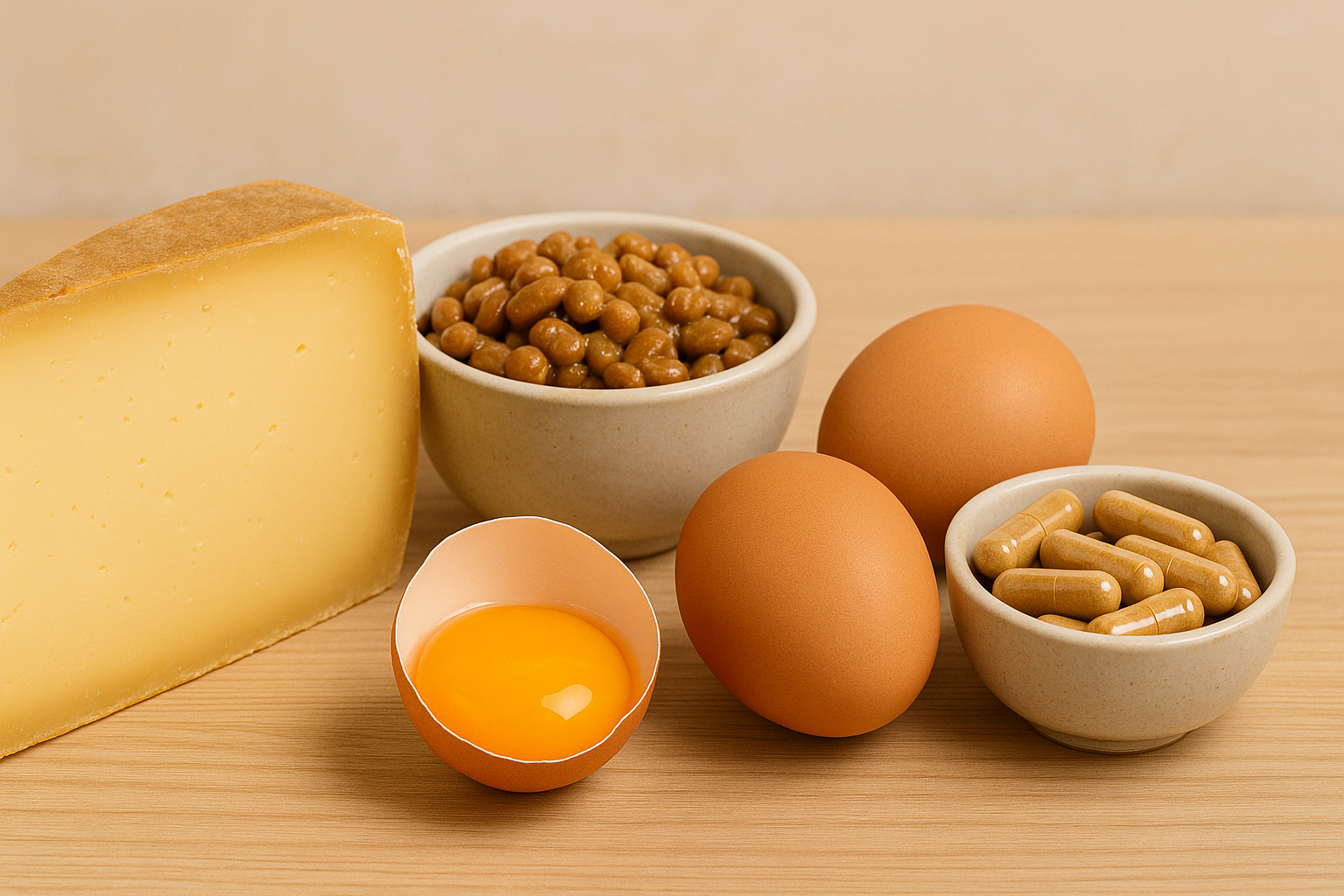
- Natto (fermented soybeans): The richest natural source of K2.
- Cheese (especially aged varieties): Gouda, Brie, and Edam are high in K2.
- Egg yolks: Especially from pasture-raised hens.
- Grass-fed butter and dairy: Small but valuable amounts of K2.
- Organ meats (like liver): Traditional sources of fat-soluble vitamins.
- Chicken and other meats: Contain menaquinones, though in smaller amounts.
The Role of Supplements
Because natural food sources are limited, Vitamin K2 supplements are an effective way to ensure adequate intake.
- Look for MK-7 form of Vitamin K2 (longer half-life, stays in the body longer).
- Often paired with Vitamin D3 for synergistic benefits.
- Best taken with meals containing healthy fats to improve absorption.
How Much Do You Need?
There is no official RDA (Recommended Daily Allowance) for Vitamin K2, but studies suggest that 90–120 mcg daily can provide health benefits. Individual needs may vary, and higher doses may be considered under medical supervision.
The Bottom Line
Vitamin K2 may not be the most talked-about nutrient, but its benefits are undeniable. By ensuring calcium goes where it belongs, into bones and teeth instead of arteries, K2 plays a vital role in long-term health.
With limited food sources, adding K2-rich foods like natto, aged cheese, and egg yolks along with a high-quality Vitamin K2 supplement can help fill the gap and keep your body strong, resilient, and protected.