

Electrolytes are more than just a buzzword on sports drink labels. They are essential minerals that help regulate many of the body’s most important functions, from hydration to muscle contraction. Without the right balance of electrolytes, even daily tasks like walking, concentrating at work, or exercising can feel more challenging.
Fortunately, electrolytes don’t just come from supplements they are found in everyday foods that can easily be added to your diet. In this blog, we’ll explain what electrolytes are, why the body needs them, and the best foods to keep your levels balanced.
What Are Electrolytes?
Electrolytes are minerals that carry an electric charge when dissolved in fluids like blood and water. The main electrolytes in the human body include:
- Sodium
- Potassium
- Calcium
- Magnesium
- Chloride
- Phosphate
- Bicarbonate
These minerals support vital processes that keep your body functioning properly every single day.
Why the Body Needs Electrolytes
Electrolytes are essential because they:
- Maintain fluid balance: They help regulate hydration inside and outside your cells.
- Support muscle function: Sodium, potassium, and calcium are critical for muscle contractions including your heartbeat.
- Aid in nerve signaling: Electrolytes carry electrical signals that allow the brain and nerves to communicate with the body.
- Regulate pH balance: They help keep blood and tissues within a healthy pH range.
- Support energy levels: Electrolyte balance affects metabolism and how efficiently the body uses fuel.
How Electrolytes Affect Daily Activities
An electrolyte imbalance can show up in subtle ways that interfere with everyday life, such as:
- Fatigue and brain fog: Low electrolytes can reduce focus and energy.
- Muscle cramps and weakness: Especially common when potassium, magnesium, or sodium are too low.
- Dehydration symptoms: Headaches, dizziness, or dry mouth can result from fluid and electrolyte loss.
- Reduced exercise performance: Athletes need electrolytes to sustain endurance, prevent cramping, and support recovery.
- Heart rhythm changes: Imbalances, particularly in potassium and calcium, can affect cardiovascular health.
Top Foods Rich in Electrolytes
1. Bananas (Potassium)
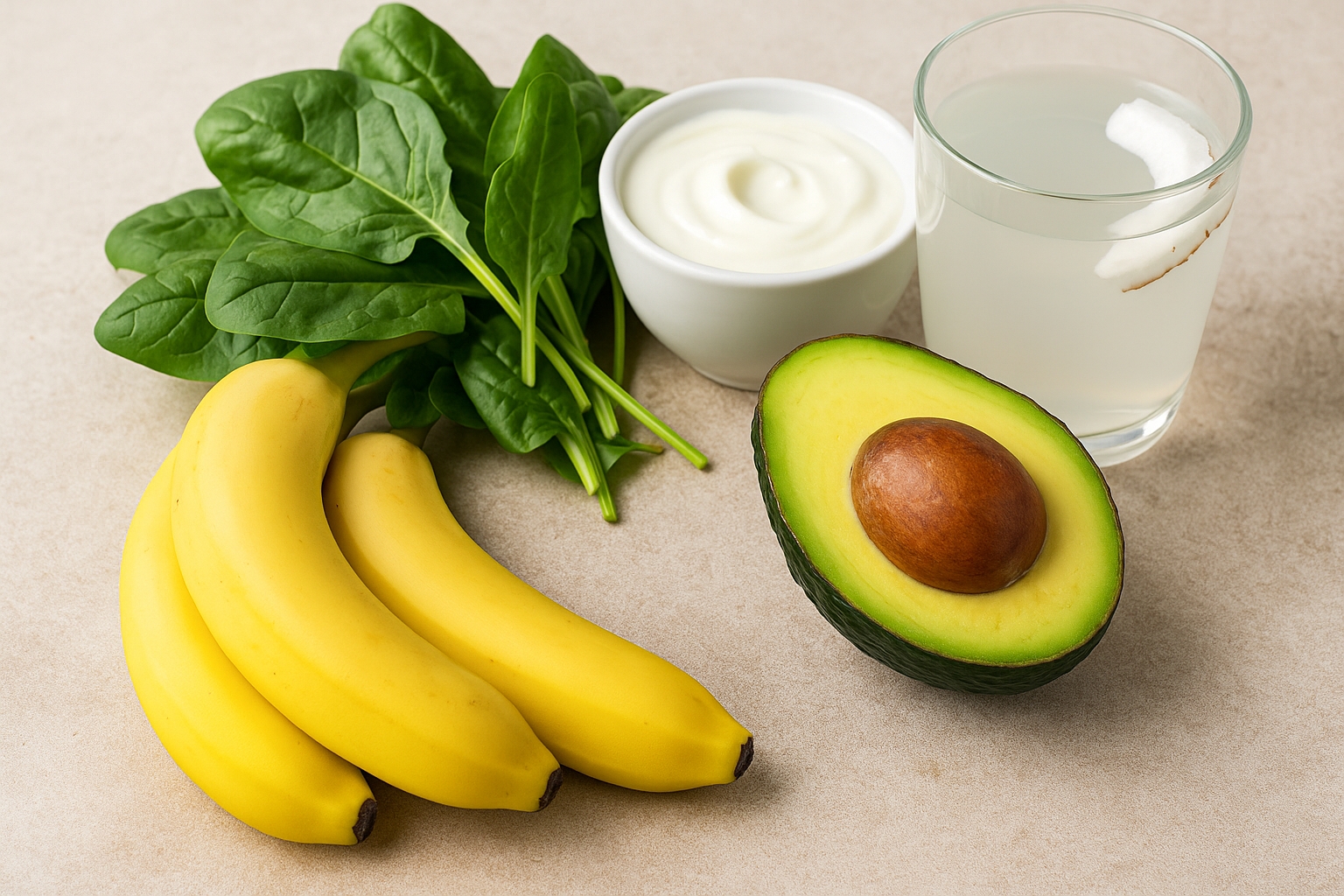
Bananas are a go-to source of potassium, which helps prevent muscle cramps and supports healthy blood pressure.
2. Spinach and Leafy Greens (Magnesium, Calcium, Potassium)
Spinach, kale, and Swiss chard provide multiple electrolytes that support muscle function, hydration, and bone health.
3. Avocados (Potassium and Magnesium)
Avocados contain more potassium than bananas and also deliver magnesium, making them excellent for hydration and heart health.
4. Coconut Water (Potassium and Sodium)
Known as “nature’s sports drink,” coconut water replenishes electrolytes naturally after exercise or heat exposure.
5. Yogurt (Calcium and Phosphorus)
A probiotic-rich food that also supplies calcium and phosphorus for bone strength and nerve signaling.
6. Salmon and Fatty Fish (Potassium and Magnesium)
Rich in electrolytes and omega-3 fatty acids, salmon supports muscle, heart, and overall cellular health.
7. Beans and Lentils (Magnesium, Potassium, Phosphorus)
Plant-based powerhouses that balance blood sugar and restore electrolytes.
8. Oranges and Citrus Fruits (Potassium and Magnesium)
Citrus fruits refresh hydration while delivering essential minerals and vitamin C for immune support.
9. Nuts and Seeds (Magnesium and Phosphorus)
Almonds, pumpkin seeds, and sunflower seeds provide magnesium, which helps regulate muscle and nerve function.
10. Table Salt and Sea Salt (Sodium and Chloride)
In moderation, salt is vital for maintaining hydration and supporting nerve impulses.
Practical Tips for Maintaining Electrolyte Balance
- Eat a variety of whole foods: Fruits, vegetables, dairy, fish, and legumes all contribute to electrolyte balance.
- Stay hydrated: Water alone isn’t always enough, electrolytes help your body absorb and retain fluids.
- Replenish after sweating: Exercise, hot weather, or illness can deplete electrolytes. Foods or natural electrolyte drinks help restore balance.
- Watch for signs of imbalance: Muscle cramps, dizziness, or persistent fatigue may signal low electrolytes.
Conclusion
Electrolytes are essential minerals that power your body’s daily functions from keeping your heart beating to ensuring your muscles and brain work smoothly. Instead of relying only on sports drinks, you can find electrolytes naturally in everyday foods like bananas, spinach, yogurt, avocados, and salmon.
By eating a balanced diet rich in whole foods, staying hydrated, and paying attention to your body’s signals, you can keep your electrolyte levels in check and feel your best every day.