

Cholesterol is often talked about like it is a bad thing, but your body actually needs cholesterol to function. It helps build cells, produce hormones, and support important body processes. The key is maintaining healthy cholesterol levels, especially when it comes to LDL cholesterol, often called “bad” cholesterol, and HDL cholesterol, often called “good” cholesterol.
Food plays a major role in heart health. While genetics, age, activity level, stress, sleep, and overall lifestyle matter too, the foods you eat every day can help support healthier cholesterol levels over time.
The good news? Eating for cholesterol support does not have to feel restrictive. It is less about cutting out everything you love and more about adding foods that support your heart, digestion, and overall wellness.
Start With Soluble Fiber
Soluble fiber is one of the most important nutrients for cholesterol support. It forms a gel-like substance in the digestive tract, which can help reduce the absorption of cholesterol into the bloodstream. Foods rich in soluble fiber include oats, beans, lentils, apples, pears, barley, Brussels sprouts, and flaxseeds.
Adding more fiber to your meals can also support digestion, fullness, blood sugar balance, and overall metabolic health.
Simple ways to add more soluble fiber:
Oatmeal with berries
Beans added to salads or soups
Lentils in bowls or stews
Apples or pears as snacks
Ground flaxseed in smoothies
Barley instead of white rice
Oats and Oat Bran
Oats are one of the most well-known foods for cholesterol support, and for good reason. They contain beta-glucan, a type of soluble fiber that helps support healthy LDL cholesterol levels. Harvard Health notes that oatmeal or oat-based cereal can provide one to two grams of soluble fiber at breakfast, and adding fruit can increase that amount.
Try oats as:
Overnight oats
Warm oatmeal
Oat-based smoothies
Homemade oat bars
Oat bran mixed into yogurt
For the best balance, pair oats with protein and healthy fats, such as Greek yogurt, chia seeds, walnuts, or nut butter.
Beans, Lentils, and Legumes
Beans and lentils are fiber-rich, satisfying, and heart-friendly. They are especially helpful because they provide soluble fiber while also serving as a plant-based protein source.
Replacing some higher-saturated-fat meats with beans or lentils can be a simple way to support heart health. Harvard Health highlights beans as especially rich in soluble fiber and notes that they take longer to digest, which can help you feel full longer.
Try adding:
Black beans to tacos
Chickpeas to salads
Lentils to soups
White beans to pasta dishes
Edamame as a snack
Hummus with vegetables
Fruits Rich in Pectin
Fruits are packed with vitamins, minerals, antioxidants, and fiber. Some fruits, especially apples, pears, citrus fruits, and berries, contain pectin, a type of soluble fiber that can support cholesterol-friendly eating.
These fruits are also naturally sweet, making them a great swap for more processed snacks.
Cholesterol-friendly fruit ideas:
Apple slices with almond butter
Berries over oatmeal
Orange slices with breakfast
Pear with walnuts
Grapefruit with a balanced meal, unless it interacts with your medication
If you take cholesterol medication or other prescriptions, check with your healthcare professional before eating grapefruit, because it can interact with certain medications.
Vegetables, Especially High-Fiber Options
Vegetables support heart health in several ways. They provide fiber, antioxidants, potassium, magnesium, and plant compounds that support overall wellness.
Some vegetables are especially helpful because they contain soluble fiber. These include Brussels sprouts, okra, eggplant, carrots, sweet potatoes, and leafy greens.
Easy ways to eat more vegetables:
Add spinach to smoothies
Roast Brussels sprouts with olive oil
Use eggplant in pasta or grain bowls
Snack on carrots with hummus
Add greens to omelets
Build half your plate around vegetables
A simple rule: the more color on your plate, the more variety of nutrients you are likely getting.
Nuts and Seeds
Nuts and seeds provide unsaturated fats, fiber, plant sterols, minerals, and antioxidants. Almonds, walnuts, pistachios, chia seeds, flaxseeds, and pumpkin seeds can all fit into a heart-healthy eating pattern.
Walnuts and flaxseeds are also sources of plant-based omega-3 fatty acids. Mayo Clinic lists walnuts and flaxseeds as good sources of omega-3 fatty acids, which support heart health.
Because nuts and seeds are calorie-dense, a small serving goes a long way. Try adding a handful to meals instead of eating them straight from the bag.
Simple ideas:
Walnuts on oatmeal
Chia seeds in yogurt
Ground flaxseed in smoothies
Pumpkin seeds on salads
Almonds with fruit
Nut butter on whole grain toast
Fatty Fish
Fatty fish like salmon, sardines, trout, herring, and mackerel contain omega-3 fatty acids. Omega-3s do not directly lower LDL cholesterol, but they offer other heart health benefits, including support for healthy triglyceride levels and blood pressure.
Try enjoying fatty fish two times per week as part of a balanced diet.
Heart-friendly meal ideas:
Salmon with roasted vegetables
Sardines on whole grain toast
Trout with a side salad
Tuna over greens
Mackerel with quinoa and herbs
If you do not eat fish, walnuts, chia seeds, flaxseeds, and algae-based omega-3 options may be worth discussing with a healthcare professional.
Olive Oil and Avocado
Not all fats are the same. Replacing saturated fats with unsaturated fats can support a more heart-friendly eating pattern. The American Heart Association notes that eating too much saturated fat can raise LDL cholesterol, which is why choosing healthier fats matters.
Olive oil and avocado are two easy ways to add unsaturated fats to meals.
Try:
Olive oil-based salad dressing
Avocado on whole grain toast
Olive oil over roasted vegetables
Avocado in smoothies
Guacamole with sliced vegetables
Olive oil instead of butter when cooking
The goal is not to avoid fat. The goal is to choose fats that better support heart health.
Whole Grains
Whole grains provide fiber, minerals, and steady energy. Instead of refined grains, choose options like oats, barley, quinoa, brown rice, farro, bulgur, and whole grain bread.
Barley is especially helpful because it contains beta-glucan, the same type of soluble fiber found in oats.
Simple swaps:
White rice → barley or brown rice
White bread → whole grain bread
Sugary cereal → oatmeal
Regular pasta → whole grain pasta
Crackers → seeded whole grain options
Small swaps can add up when they become part of your daily routine.
Foods to Limit for Cholesterol Support
Supporting healthy cholesterol is not only about what you add. It also helps to reduce foods that may work against your goals.
Saturated fats, commonly found in fatty meats, butter, cheese, and full-fat dairy products, can raise total cholesterol. Mayo Clinic notes that reducing saturated fat intake can help reduce LDL cholesterol.
Try limiting:
Fried foods
Processed meats
High-fat cuts of red meat
Butter-heavy meals
Full-fat dairy in large amounts
Packaged foods with trans fats
Pastries and highly processed snacks
You do not have to be perfect. Start by making realistic swaps most of the time.
A Simple Cholesterol-Friendly Plate
A heart-supportive plate can look simple and satisfying.
Try building meals with:
Half a plate of vegetables
One quarter lean protein or plant protein
One quarter whole grains or starchy vegetables
A small amount of healthy fat
Fruit or yogurt as a balanced add-on
Example meal:
Grilled salmon, roasted Brussels sprouts, barley, olive oil dressing, and berries on the side.
Another option:
Lentil bowl with spinach, avocado, tomatoes, quinoa, herbs, and a lemon olive oil dressing.
Final Thoughts
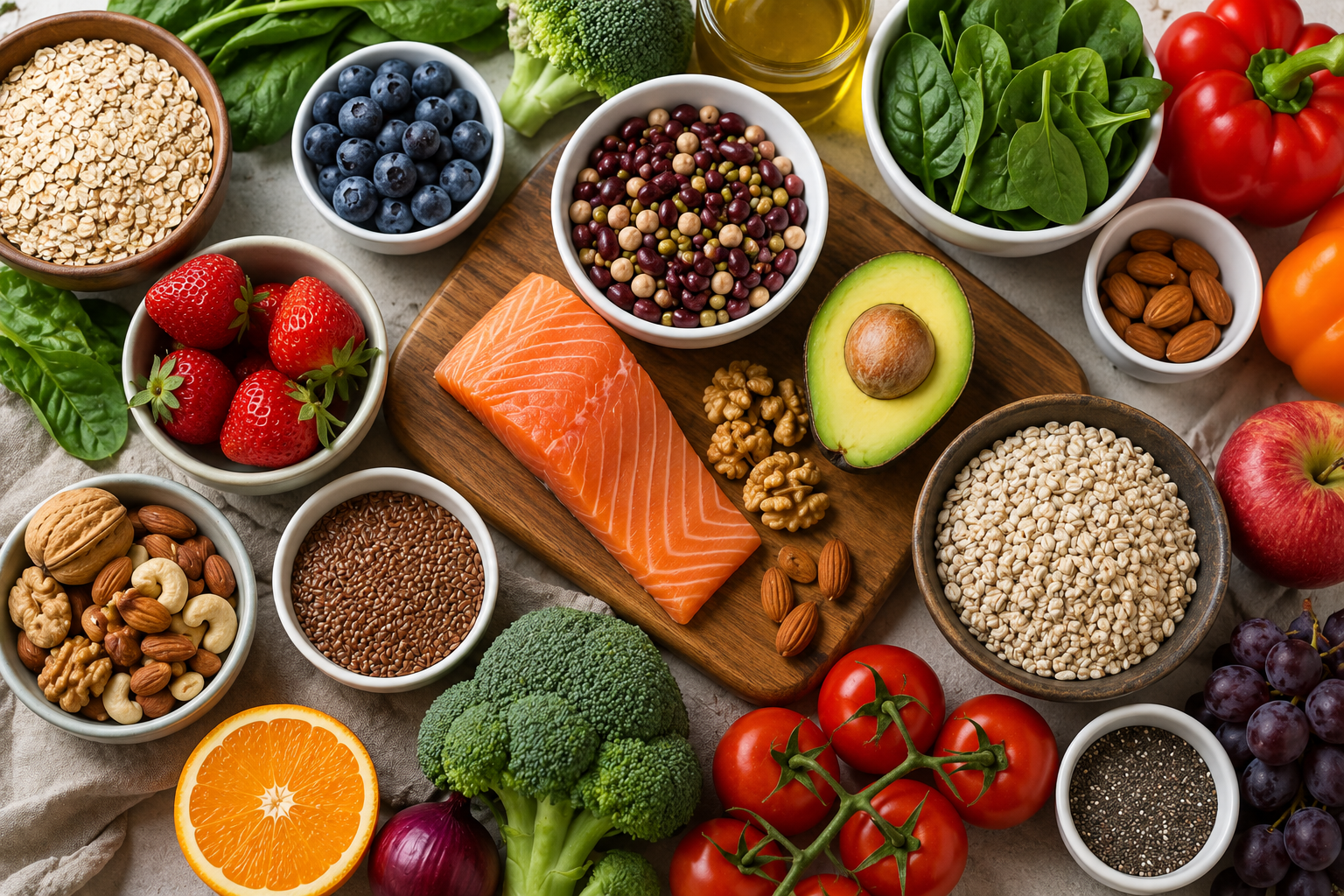
The best foods to support healthy cholesterol levels are often simple, everyday foods: oats, beans, lentils, fruits, vegetables, nuts, seeds, fatty fish, olive oil, avocado, and whole grains.
Instead of focusing on restriction, focus on building meals that include more fiber, more plants, and more healthy fats. Over time, these small choices can support your heart, digestion, energy, and overall wellness.
Healthy cholesterol support starts with what you do consistently, not what you do perfectly.